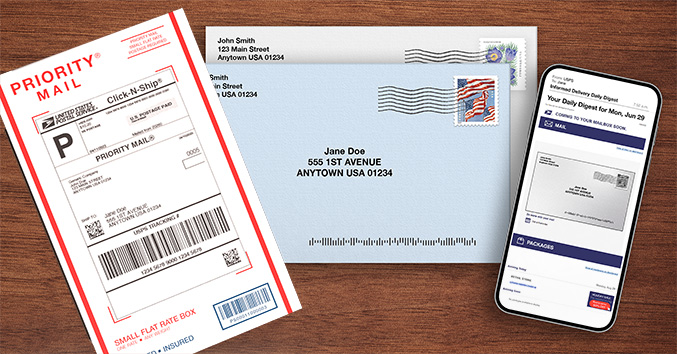
Answer first: Before applying, verify that the address can receive bank mail, that the name can be matched to the mailbox, and that you understand whether the address may appear as a commercial mail receiving agency. Do not use an address you cannot monitor.
How to use this guide: step-by-step checklist
- Run the address through USPS formatting or address lookup tools and save the standardized format.
- Confirm whether the address is residential, business, virtual mailbox, or commercial mail receiving agency.
- Ask who receives bank envelopes, who can scan them, and how quickly urgent mail is reported.
- Use the same name, unit, and address format across bank, tax, phone, and loyalty accounts.
- Set a mail-monitoring routine for new cards, replacement cards, PIN letters, fraud letters, and annual notices.
- Pause applications if you cannot receive or recover physical mail reliably.
Who it is for / who should skip
Use this guide if
- ITIN or no-SSN applicants building US credit infrastructure
- Travelers managing US financial accounts from outside the United States
- Anyone using family, office, mailbox, or forwarding addresses for card mail
Skip or pause if
- Anyone planning to misrepresent residence or identity
- Anyone who cannot access bank mail quickly
- Anyone who has no repayment account or contact plan yet
Decision table
| Situation | Best use | Risk check |
|---|---|---|
| Family or trusted residential address | Best when the resident agrees to receive and safeguard bank mail. | Name mismatch or privacy issues can still trigger problems. |
| Virtual mailbox or CMRA | Can be operationally useful for scanning and forwarding. | Some issuers may flag commercial mailbox addresses. |
| Temporary hotel or short-term rental | Usually poor fit for financial mail. | Lost cards, returned mail, and identity-review risk. |
| Frequent address changes | Use only when life circumstances require it. | Rapid changes can trigger verification and account friction. |
Why address quality affects approvals
Banks use address data to verify identity, deliver physical cards, and contact you when digital channels fail. A deliverable address is useful; a controlled and monitored address is safer.
USPS formatting is the first check, not the final answer
Standardized formatting reduces errors, but it does not tell you whether a bank will accept the address. Treat USPS checks as a baseline and then consider mailbox control and issuer policy.
Commercial-mailbox risk is real
A CMRA or virtual-mailbox address may work in some cases, but it can also create extra review. The risk is highest when the rest of the profile is thin or inconsistent.
Returned mail can damage account trust
If a card or notice is returned, the bank may restrict the account, require verification, or refuse replacement mail. Monitoring mail is part of account maintenance.
Keep a contact-stack log
Record the official address format, mailbox provider, forwarding fees, scan policy, emergency contact, and which accounts use that address.
Change addresses slowly
When you need to update an address, do it after payments and statements are stable, then verify that each bank confirms the change.
Topic intelligence used
| Search intent | Applicant wants a practical, compliant way to check whether a US mailing address can receive bank mail before applying. |
|---|---|
| Keyword variants | USPS address verification credit card · virtual mailbox credit card risk · US mailing address for credit cards · CMRA bank mail risk |
| Risk points | commercial-address flags · lost card mail · identity review · returned statements · rapid address changes |
Related GlobalHotelTravel guides
Amex Global Transfer for International Users: US Card Checklist
A practical Amex Global Transfer checklist for international users entering US travel rewards: profile matching, documents, risks, and next steps.
Chase Sapphire Preferred vs Reserve: Travel Card Decision Guide
Compare Chase Sapphire Preferred and Reserve with a step-by-step travel card decision guide covering credits, transfer partners, fees, and 5/24 timing.
Marriott, Hilton and IHG Buy Points Promotions: Valuation Checklist
A conservative hotel-points buying checklist for Marriott, Hilton and IHG promotions, covering dynamic pricing, fees, cancellation, and when to skip.
US credit card starter roadmap
Build a safer first-card sequence.
Mailing, phone and bank checklist
Prepare the operating stack before applying.
Chase 5/24 strategy
Protect Chase timing and slots.
Chase transfer partners
Use UR transfers safely.
Amex MR to ANA, Aeroplan and Avios
Compare Amex transfer paths.
Points transfer timing
Avoid irreversible transfer mistakes.
Amex Marriott Business offer
Value Marriott card benefits.
FAQ
Can I use a virtual mailbox for credit cards?
Some applicants use virtual mailboxes, but acceptance varies by issuer and situation. Understand CMRA risk and never misrepresent your facts.
Is USPS verification enough?
No. USPS formatting helps with deliverability, but bank acceptance depends on identity, issuer rules, fraud models, and mail handling.
What should I do if card mail is returned?
Contact the issuer, confirm the correct address, and avoid submitting new applications until mail reliability is fixed.